Mattress guide
Soft, Medium, or Firm? A Practical Guide to Mattress Tension
Choosing a mattress can feel like a simple matter of picking a label: soft, medium, firm, or extra-firm. But tension is only one part of how a mattress feels. Your body build, usual sleeping position, comfort preferences, and the way a mattress is constructed all help determine whether its support feels right to you.
A firm mattress is not automatically more supportive, and a softer one is not necessarily a poor choice. The best option is the one that lets you settle comfortably while keeping your body feeling well supported. Here’s how to compare mattress tensions with more confidence—and how to make the decision when two people share a bed.
What does mattress tension mean?
Mattress tension describes how resistant the spring system feels when you lie down. A softer tension generally yields more readily under pressure, while a firmer tension offers more resistance. Medium sits between those sensations, though there is no universal scale that makes one maker’s “medium” identical to another’s.
It’s also useful to distinguish tension from the overall feel of a mattress. A comfort layer made from wool, cotton, or other fillings affects how the surface welcomes your body. The spring system beneath it affects how the mattress responds to weight and movement. Together, these elements create the sensation you experience—not the tension label alone.
That’s why two mattresses marked “firm” can feel quite different. One may have a cushioned surface over a responsive spring unit; another may feel more immediately resistant. Construction, materials, mattress depth, and how your own weight is distributed all shape the result.
Soft, medium, firm, and extra-firm: what might each feel like?
Think of tension options as a starting point for comparison rather than a promise about the exact sensation you’ll have. Your experience will depend on your body and the full mattress design, but these broad descriptions can help you know what to look for when trying a bed.
- Soft: Usually gives more easily beneath the body. Some sleepers enjoy its more yielding feel, particularly if they prefer a cushioned surface. The important test is whether it still feels supportive rather than allowing you to sink in more than is comfortable.
- Medium: Often appeals to people who want a balance between cushioning and resistance. It can be a useful place to begin testing, but it is not a guaranteed “one size fits all” solution.
- Firm: Tends to offer more resistance and a less yielding sensation. Some people simply prefer that feel. Others may find it too hard if their body does not settle comfortably against the surface.
- Extra-firm: Offers still greater resistance. It may suit someone who specifically likes a very firm feel, but the label alone cannot establish whether it will be comfortable or appropriate for a particular sleeper.
These descriptions are deliberately general. A tension name is a useful shorthand for comparison, not a measurement of comfort or a substitute for trying a mattress when that’s possible.
Why body build matters
A mattress responds to the sleeper who lies on it. Someone with a lighter build may not compress a spring system as much as someone with a heavier build, which can make the same mattress seem firmer to one person and more yielding to another. The distribution of body weight also matters: pressure is not applied evenly across the surface.
This is one reason online recommendations based on a single characteristic can be misleading. Body build is relevant, but it does not make the decision for you. Two people with similar builds can prefer different sensations, and the same sleeper may make different choices depending on mattress construction, sleep position, or changing comfort needs.
Use your build as a prompt for testing rather than as a rule. Ask yourself whether you can settle into the mattress without feeling uncomfortably suspended above the surface or overly enveloped by it. Notice whether the support feels consistent as you move into your usual position. The right tension should feel comfortable to you, not merely match a chart.
Consider your usual sleeping position
Sleeping position can influence where you feel pressure and how the mattress responds. It is worth considering because comfort depends on more than whether the surface feels soft or firm beneath your hand in a showroom. Try to assess the mattress in the position you actually use for much of the night.
- Side sleepers may pay particular attention to how the mattress feels around the shoulder and hip. If those areas feel pressed or unsettled, the surface may not be giving the way they prefer. If it feels excessively yielding, that may not be comfortable either.
- Back sleepers can notice whether the mattress feels evenly supportive from the upper back through the hips. Look for a comfortable, settled sensation rather than assuming that a firmer surface is always the better match.
- Stomach sleepers may have different preferences again. Consider whether the surface feels stable and comfortable in that position, and whether you can remain relaxed without feeling that you are sinking more than you like.
Many people change positions during the night. If you do, take time to test more than one position rather than choosing based on a brief first impression in a single posture. Your goal is not to identify a universally correct position or tension, but to find a mattress that feels good across the ways you normally sleep.
Support is not the same as firmness
It’s easy to hear “more support” and translate it as “firmer.” The two ideas are related, but they are not interchangeable. Firmness describes a sensation; support describes how well a mattress responds to your body and feels over the area you are using. A very firm mattress can feel uncomfortable to a particular sleeper, while a softer mattress may still feel adequately supportive to someone else.
For this reason, do not shop by firmness label alone. Pay attention to the complete experience: how quickly you settle, whether the surface feels balanced, whether pressure points distract you, and whether you can change position without struggling against the mattress. A useful test is to stay on the bed long enough for the initial “new surface” sensation to pass.
Remember, too, that the bed base and mattress work together. The support system beneath the mattress can affect how the finished bed feels. When comparing options, ask whether the mattress is intended for a particular base and test it on a comparable setup where possible.
How construction changes the feel
Spring tension is only one part of a mattress’s construction. Pocket springs, for example, sit in individual fabric pockets and can respond separately to pressure. The fillings above the spring unit influence the initial cushioning and the way the surface breathes and settles. Hand-tufting and other construction details can also help hold fillings in position.
Natural materials may contribute their own qualities to the surface feel. Wool and cotton are used in some mattresses as upholstery fillings, while horsetail can add resilience. The amount and arrangement of these materials matter: a thick, cushioned surface over a firmer spring unit may feel different from a more direct spring sensation, even when both mattresses offer the same named tension.
When comparing models, look beyond a single specification. Ask about the spring system, the available tensions, the filling materials, and the way the mattress is finished. Then connect those details to what you actually feel when lying down. Technical features are helpful context, but your comfort response remains central.
A practical way to test a mattress
A few minutes spent testing deliberately can tell you more than repeatedly pressing a mattress with your hand. If you can try a model in person, use a simple routine that reflects real sleep rather than a quick showroom impression.
- Start in your usual position. Lie down as you would at home, and give yourself time to settle.
- Check more than one position. If you move between your side, back, and stomach, test each one you use regularly.
- Notice pressure and ease. Does the mattress feel comfortable beneath your shoulders and hips? Can you relax without feeling that the surface is pushing back too much or yielding more than you prefer?
- Try changing position. See whether movement feels natural and whether the surface remains comfortable when you turn.
- Compare tensions on the same model. If a mattress is offered in several tensions, testing those options can help you separate the effect of tension from differences in materials or construction.
- Ask about the trial and care terms. Confirm the return, exchange, delivery, and mattress-care policies before you decide. The details vary by retailer and product.
Bring your questions, but resist the urge to make the choice based on a single phrase such as “most popular” or “best for everyone.” A mattress is a personal purchase. Your own comfort response is more useful than a label’s reputation.
When partners prefer different tensions
Sharing a bed does not always mean sharing the same mattress preference. One person may want a softer feel while the other prefers a firmer surface. Rather than treating that difference as a reason to compromise automatically, first compare what each of you finds comfortable and check whether the model offers a split-firmness option.
With split firmness, the two sides of a shared mattress can be specified at different tensions. This can make it possible for each sleeper to choose a feel that better matches their preference while keeping a shared bed. Availability depends on the mattress, size, and supplier, so it is important to confirm the options before ordering.
Talk about what you mean by “soft” or “firm.” Those words can describe different sensations for different people. When testing together, each partner should lie on their own side in their usual position and describe what feels comfortable or uncomfortable. Compare notes without assuming one person’s preference is more correct. If motion or edge feel matters to either of you, consider those features as well as tension.
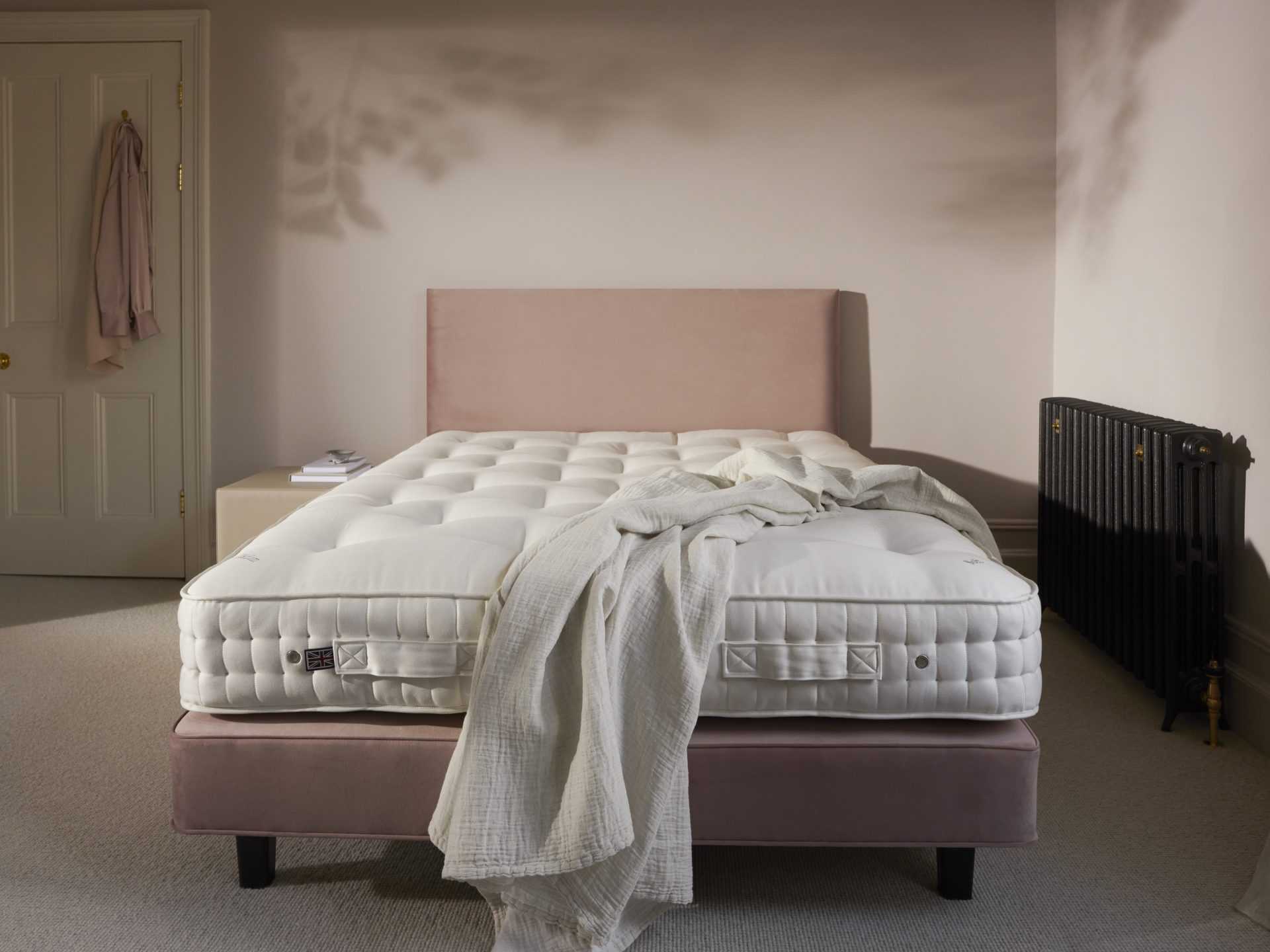
The Vispring Herald Superb Mattress is one example of a model offered in soft, medium, firm, and extra-firm tensions, with split firmness available in king size. Its hand-nested calico pocket springs are paired with natural fillings including British fleece wool, cotton, and South American horsetail. Those construction details help explain what the mattress is made from, while trying the available tensions remains the best way to judge which feel suits you.
Common mattress-tension myths
“Firm is always best for your back.” A firmness label does not, by itself, tell you how comfortable or supportive a mattress will feel to you. Instead of assuming that firmer is better, consider your position, build, and response to the whole mattress.
“A soft mattress has no support.” Softness describes how readily a surface yields, not a complete assessment of its construction. Evaluate the mattress as a whole and decide whether its feel suits you.
“Medium works for everyone.” Medium can be a sensible option to try, particularly if you are unsure where to start. But it is not a universal answer. Different people—and different mattress designs—can make the same label feel quite different.
“The hand test tells you everything.” Pressing the top of a mattress may show how the surface responds locally, but it cannot reproduce lying down with your full body weight. Test it in your normal sleep positions instead.
Questions to ask before choosing
Once you have narrowed down the feel you prefer, a few practical questions can help you compare options more clearly:
- Which tensions are available in the size I need?
- Can a shared mattress be made with split firmness?
- What spring system and upholstery fillings does the mattress use?
- Is the model designed for a particular base or bed frame?
- What are the retailer’s delivery, exchange, and trial terms?
- What care, rotation, or turning instructions apply to this specific mattress?
Answers will vary across brands and models, so check the product information rather than relying on assumptions. A good comparison keeps the details together: tension, construction, bed base, household needs, and the terms of purchase.
The best tension is the one that feels right to you
Soft, medium, firm, and extra-firm are useful starting points, but none can predict comfort perfectly. Body build affects how deeply you compress a mattress; sleeping position affects where you feel pressure; and fillings and spring construction influence how the surface responds. Put those factors together, then judge the mattress by how it feels beneath you.
If you share a bed, include both sleepers in the decision and ask whether split firmness is available. Take time to test the mattress in your everyday positions, compare options on the same model when possible, and check the practical terms before purchasing. Most importantly, do not mistake a firm label for a guarantee of better support. The right mattress tension is a personal balance of comfort and response—one that lets you rest without second-guessing the choice.